A mineral processing equipment manufacturer built around the duty.
A mineral processing equipment manufacturer should start with the duty, not the catalogue. Feed size changes grinding duty. Grinding changes liberation. Liberation changes separation. Water balance, elevation, power supply, climate and maintenance access all affect the equipment decision. Xinhai Mining connects equipment selection and manufacturing with testwork and engineering, so the package starts from the process rather than a catalogue page.
Discuss your project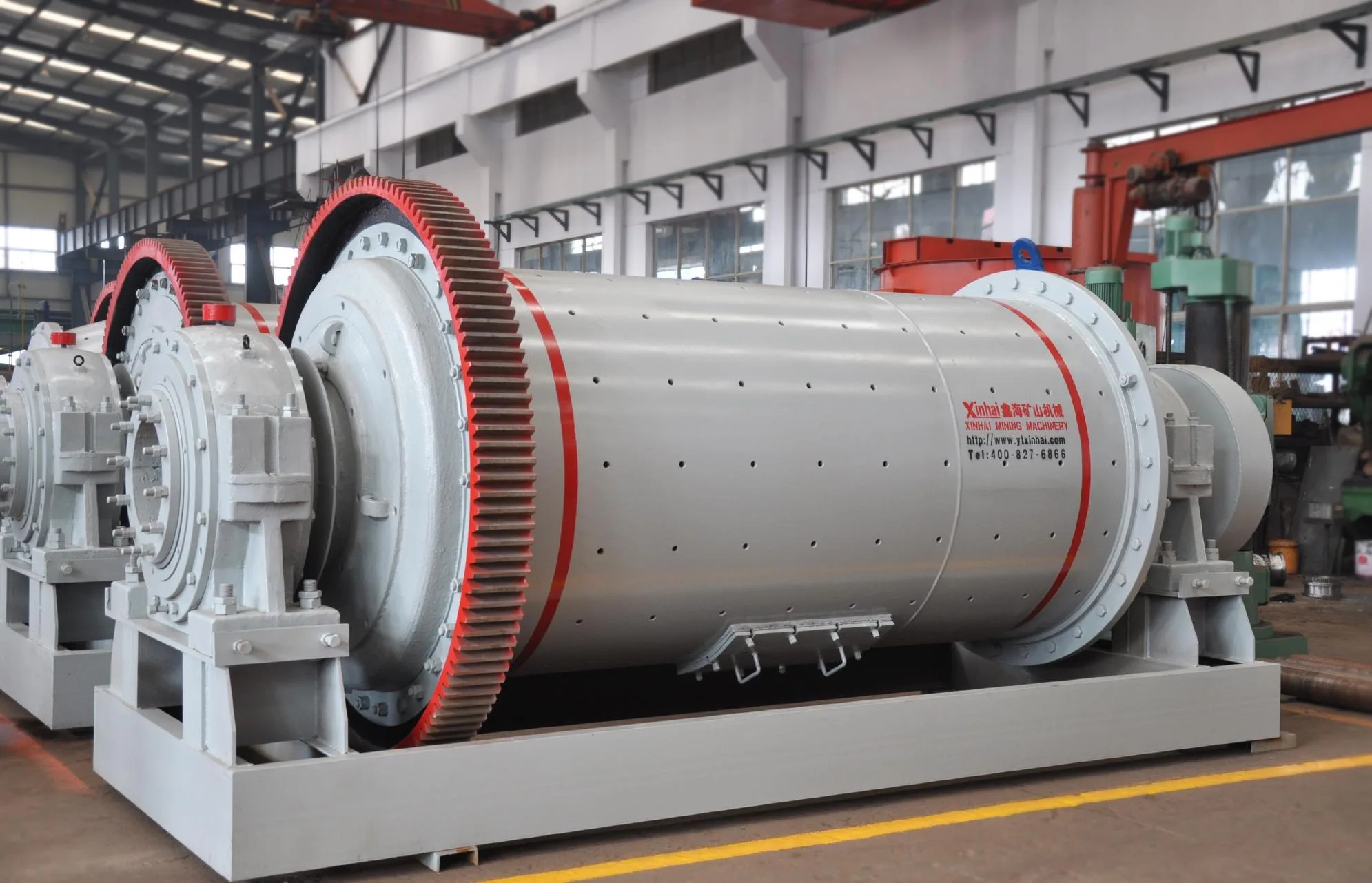
Equipment across the mineral processing line
Xinhai's published product range covers the main steps between run-of-mine feed and final concentrate or tailings handling. That includes crushing and screening; grinding and classification; flotation; gravity and magnetic separation; gold extraction; washing; thickening and dewatering; agitation; feeding and conveying; pumps, valves and hydrocyclones; automation; and selected consumables.
You may need one replacement machine with a defined duty. You may need a coordinated package for a new plant. Those are different procurement jobs. A single-machine inquiry should state the process position, feed characteristics, required capacity and upstream or downstream constraints. A plant package needs a design basis, equipment list, interface schedule and control philosophy.
- Crushing, feeding and screening
- Grinding, classification and hydrocyclones
- Flotation, gravity and magnetic separation
- Gold leaching and adsorption systems
- Thickening, filtration and tailings dewatering
- Pumps, valves, conveying and agitation
- Instrumentation, process control and equipment monitoring
- Wear parts and selected processing consumables
Official referencesXinhai Mining reference 1
Grinding and classification
Grinding usually sits at the centre of both energy demand and downstream performance. The mill must match the ore's grindability, feed size, target product size, circulating load and operating strategy. Classification has to match it too. Buying for sheer size is not a design method.
Xinhai's equipment range includes grid and overflow ball mills, energy-saving ball mills, rod mills, spiral classifiers and hydrocyclones. Its large-equipment manufacturing capability includes φ7 m-class ball mills and smaller, project-specific mill installations.
For a useful grinding inquiry, provide available Bond Work Index data, feed and product size targets, moisture, capacity, operating schedule and site power conditions. If those data do not exist, say so. Testwork may be the next purchase—not the mill.
Official referencesXinhai Mining reference 1
Separation and gold processing
Separation equipment has to reflect how the valuable mineral occurs—not just what the commodity is called. Liberation, density contrast, magnetic response, surface chemistry, clay content and oxidation state can all change the route.
Xinhai lists flotation cells, jigs, shaking tables, spiral chutes, magnetic separators and gold-processing equipment among its product families. Gold systems include leaching agitation tanks, carbon screens and desorption electrolysis equipment. The research laboratory can test gravity separation, magnetic separation, flotation, cyanide leaching and adsorption, bio-oxidation, acid leaching and combined routes before full-scale equipment is fixed.
This is where a catalogue comparison becomes dangerous. Two gold ores can demand different circuits. A polymetallic ore may require staged separation and regrinding. A graphite project may put unusual weight on product quality and tailings behaviour. The equipment package should follow the selected process route, including recycle streams and control points.
If the route remains uncertain, begin with representative samples and the question the test programme must answer.
Official referencesXinhai Mining reference 1
Dewatering, tailings and water return
The back end of the plant affects the whole water balance. Thickener selection, filtration duty, tailings dewatering and return-water quality cannot be left until the main process package is already closed.
Xinhai's product range includes conventional and deep-cone thickeners, peripheral-drive thickeners, dewatering screens, vacuum filters, drum filters and ceramic filters. The manufacturing portfolio includes thickeners up to φ100 m. Pilot facilities can test thickening, filtration and tailings dewatering as part of a broader process route.
Your inquiry should describe solids characteristics, target underflow or cake condition, water-recovery requirements, available footprint and how the tailings will be transported or stored. For an existing plant, include current feed density, throughput and the failure mode you see—poor settling, cloudy overflow, low cake capacity or unstable operation.
These details make the equipment conversation concrete. They also reveal when the issue is upstream chemistry or particle-size distribution rather than the dewatering machine itself.
Official referencesXinhai Mining reference 1
Manufacturing depth for complete packages
Xinhai Mining reports three intelligent manufacturing bases. Its intelligent equipment manufacturing base covers approximately 110,000 m² and integrates research and development, production, testing and shipping. Published capability covers more than 1,000 main and auxiliary equipment types for mining, processing and metallurgical projects below 50,000 t/d.
Large-scale production capability includes φ7 m-class ball mills, 320 m³ flotation cells, φ20 m × 20 m leaching tanks and φ100 m thickeners. The factories also support machining, welding, rolling, assembly, surface treatment and equipment inspection. A modular and prefabricated base handles pre-assembly, skid-mounted systems and containerised processing modules.
These capabilities matter when one package contains many interfaces. Factory pre-assembly can expose clashes before shipment. Common documentation and identification can make receiving and installation clearer. Large-machine capability can keep a required duty within one equipment train.
None of this replaces project-specific engineering. It gives that engineering somewhere to go.
Official referencesXinhai Mining reference 1
Automation belongs in the equipment scope
Xinhai's published automation capability includes flotation level and aeration control, ball-mill condition and safety monitoring, and thickener control with rake protection, PLC operation, data monitoring and alarms. Its wider equipment catalogue also lists belt scales, samplers, flocculant systems and reagent feeders.
For your team, the practical questions are straightforward. Which measurements control the circuit? What happens when an instrument fails? Which equipment can run locally during maintenance? What alarms need operator action? Which data must be retained for production analysis? The answer should fit the operators who will use the plant, not just the commissioning demonstration.
Share your site standard, preferred control platform and communications constraints early. Retrofits are possible. Clear interfaces are cheaper.
Official referencesXinhai Mining reference 1
What to send for an equipment proposal
Start with the process position and the duty. Add the mineral, location, capacity, feed size, target product size, slurry properties, operating hours, utilities and any preferred standards. For a replacement, include the existing model, drawings, photographs and the reason it is being replaced. For a new package, send the latest flowsheet and equipment list if they exist.
Missing data are not a reason to guess. Mark them. Xinhai can then tell you whether the next step is clarification, testing, engineering or equipment selection.
Official referencesXinhai Mining reference 1
Request an equipment proposal